
Treating what a filter cannot capture. Purification is active rather than passive, working on the air and the equipment as the system runs, which is why it addresses odours and microbial growth that filtration alone leaves behind.
Whole-Home Air Treatment • In-Duct Purification Systems • HVAC-Integrated Installation
The Short Answer
Comfort Zone installs HVAC-integrated air purification systems throughout Palm Beach, Martin, and St. Lucie Counties, as a licensed Florida HVAC contractor (License #CAC1823915) serving the region since 1976. Our systems are designed to operate safely with existing equipment while improving air sanitation and freshness.
While filtration captures dust and larger particles, purification technologies treat microorganisms, odour-causing compounds, and other contaminants as air moves through the duct system.
Systems here run for most of the year, and prolonged cooling cycles create conditions that support microbial growth inside air handlers, evaporator coils, and ductwork. Without additional treatment, those contaminants recirculate repeatedly through the property.
Choose By Problem
Purification is not one product. The right technology depends on what the actual complaint is, and the cheapest option is frequently the correct one. Here is how they differ.
If the concern is microbial growth on the evaporator coil, drain pan buildup, or contamination returning quickly after cleaning. Equipment protection, lowest cost.
Green U.V. → UV-C Plus CarbonIf musty odours are circulating as well. UV-C handles growth on the coil; the activated carbon cell adsorbs the odour compounds UV cannot touch.
APCO-X → In-Duct Air TreatmentIf the concern is general air quality throughout the property rather than the equipment. Treats the moving air stream reaching every room.
REME HALO →When People Ask
Many properties experience air quality issues without realising the source. Common signs include:
That last one matters: if you have good filtration and still have a problem, what remains is usually what a filter cannot capture.
Purification controls the rate at which contamination returns. It does not remove buildup already established.
Installing a purification system over a fouled coil means paying to slow the regrowth of material still sitting there. Professional cleaning first, then purification to protect the result, is the sequence that gives value from both.
About Coil CleaningThe Technologies
Unlike passive filtration, active purification treats air as it moves through the system, operating continuously while the HVAC runs. In a climate where equipment runs most of the year, that means near-continuous operation.
Ultraviolet light targeting microbial activity, most commonly directed at the surfaces where growth establishes.
Treatment distributed into the moving air stream rather than applied to one surface.
Ionization-based technology treating contaminants as they circulate through the duct network.
Oxidation-based treatment addressing odour-causing compounds that filtration cannot capture.
Focused microbial control on the evaporator coil, where condensate keeps surfaces damp for months.
Positioned, powered, and commissioned properly, with static pressure checked before and after.
Two Comparisons Worth Making
Treat individual rooms and must be moved between spaces to affect air quality elsewhere. They work whenever switched on, which is their one genuine advantage.
What they cannot do is treat the ductwork, the coil, or the air being delivered to rooms you are not currently occupying.
Integrate directly into HVAC equipment and treat all air circulating through the property, providing continuous purification throughout:
The trade-off is that treatment happens while the HVAC runs, which here is most of the time.
Why It Matters Here
High humidity and long cooling seasons create conditions where growth develops inside equipment. Moisture accumulating on evaporator coils and inside air handlers allows mould, mildew, and bacteria to establish if not addressed. Combined with proper filtration and humidity control, purification helps manage these conditions.
Moisture is what enables growth. It is present here in a way it simply is not in most of the country.
Long operating hours mean more circulation, but also more purification runtime from the same equipment.
Longer pollen seasons add to what circulates and settles inside the duct system.
Salt-laden coastal air adds a particulate and corrosive load inland properties never face.
Condensate keeps coil surfaces damp for months, which is precisely what microbial growth requires.
Sealed building envelopes trap indoor pollutants rather than allowing them to disperse.
Purification Questions, Answered
Yes. Filtration captures airborne particles, while purification actively treats contaminants as air passes through. We install systems designed to work together rather than as alternatives.
Yes. Most whole-home purification systems integrate into existing HVAC with minimal modification, making them a practical upgrade.
A system installed directly into your HVAC to treat the air circulating through the property, providing consistent purification in every room the ductwork serves rather than one space at a time.
Yes. Due to high humidity, allergens, and airborne contaminants, purification helps improve comfort, reduce odours, and support cleaner indoor environments.
Systems here run for most of the year, which gives in-duct purification substantially more operating time than it would get in a seasonal climate.
No. They work alongside filters, not as a replacement. Filtration captures particles; purification treats what passes through. Both are needed, and the filter still requires changing on its normal schedule.
It depends on the actual complaint. If the concern is growth on the evaporator coil or contamination returning after cleaning, a coil-focused UV system addresses the cause directly at the lowest cost.
If musty odours are circulating, a system combining UV-C with activated carbon handles both growth and smell. If the concern is general air quality throughout the property, an in-duct system treating the moving air stream fits better. We assess before recommending.
Usually yes. Purification controls the rate at which contamination returns; it does not remove buildup already established.
Installing over a fouled coil means paying to slow the regrowth of material still sitting there. Cleaning first, then purification to protect the result, is the sequence that gives value from both.
It should not, and this is a meaningful difference from filtration upgrades. Because the equipment sits within the duct or air handler rather than in the air path as a filter medium does, it adds no significant resistance.
That means purification can often be added to a system that could not accept a denser filter. We verify static pressure regardless.
Related Services
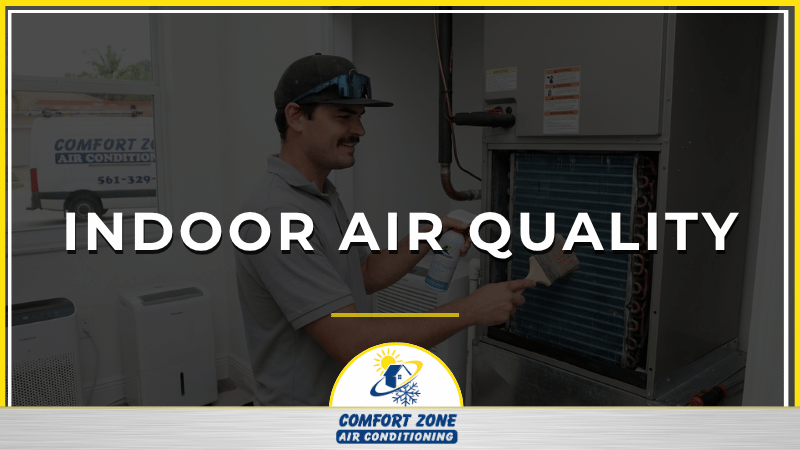
Filtration, purification, ventilation, and humidity control compared side by side.
Learn More →
The other half. Captures particles; purification treats what passes straight through.
Learn More →
Treating the equipment surfaces as well as the air moving past them.
Learn More →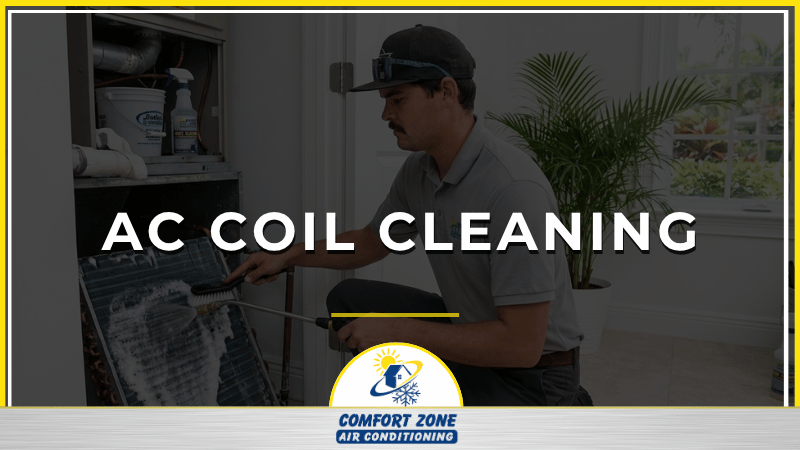
Do this first. Purification protects a clean coil rather than fixing a dirty one.
Learn More →
Moisture is what allows growth. Controlling it is upstream of every purification decision.
Learn More →
Replacing stale air rather than only treating it. Ventilation and purification complement each other.
Learn More →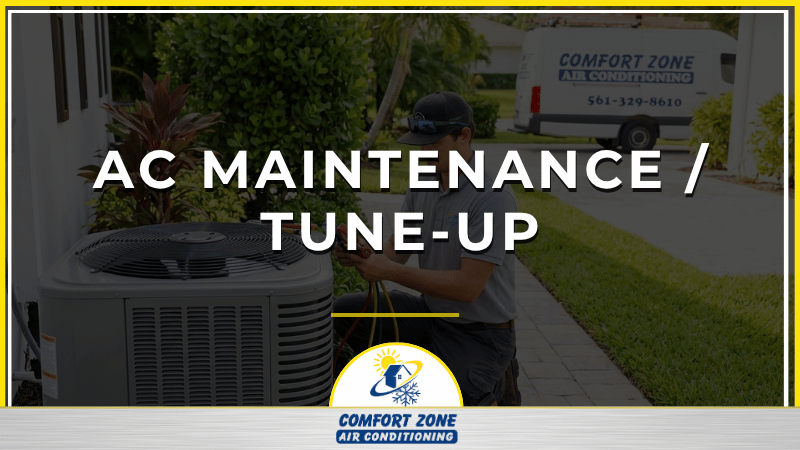
Lamp and cell replacement fit naturally into a scheduled service visit.
Learn More →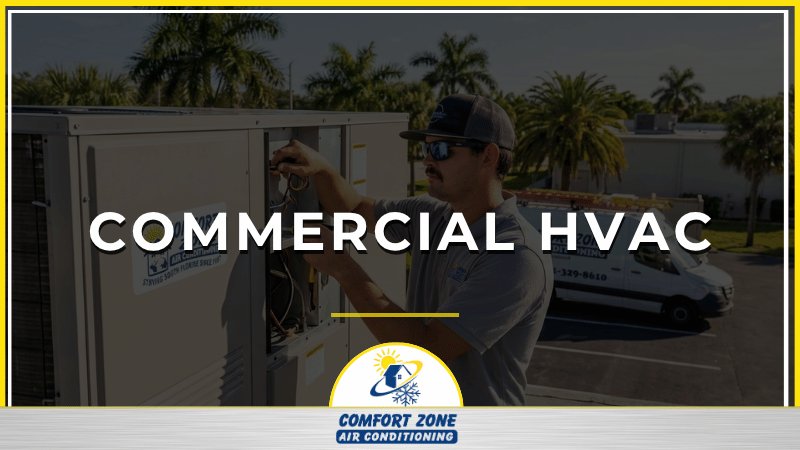
Purification for offices, medical suites, restaurants, and high-occupancy buildings.
Learn More →Swipe or use the arrows to browse related services
Serving Palm Beach, Martin & St. Lucie Counties
Our indoor air quality solutions are designed to perform reliably under Southeast Florida's high humidity and year-round HVAC demand.
That is the gap purification exists to close, but the right technology depends on whether the source is the coil, the ducts, or the air itself. An assessment identifies which, and the cheapest option is often the correct one.
Licensed • Insured • Airflow Verified • Since 1976
Comfort Zone has installed indoor air quality systems across Palm Beach, Martin, and St. Lucie Counties from the same Riviera Beach office since 1976, under Florida HVAC contractor license #CAC1823915.
From emergency AC repairs and refrigerant leak detection to full HVAC system replacement, ductwork installation, heat pump service, and indoor air quality solutions, our HVAC technicians are ready to respond.
If you are experiencing no cooling, system failure, electrical issues, or AC leaks, call now for priority dispatch at 561-790-5910.
Comfort Zone has proudly served residential and
commercial clients since 1976. Our insured technicians
provide reliable HVAC services, including
air conditioning repair, installation, system
replacement, indoor air quality solutions, and 24/7
emergency service throughout Southeast Florida.
License #CAC1823915