
Air follows the path of least resistance. A gap at the edge of a filter is a gap the air will preferentially travel through, which is why a nearly-right filter can perform little better than none at all.
Custom Filter Sizing • High-Efficiency Filtration Options • Residential & Commercial HVAC Systems
The Short Answer
Comfort Zone provides custom HVAC air filters tailored to exact system dimensions across Palm Beach, Martin, and St. Lucie Counties, as a licensed Florida HVAC contractor (License #CAC1823915) serving the region since 1976. Our technicians determine the correct filter size, filtration level, and airflow compatibility for each system.
Many air handlers, return grilles, and commercial filter cabinets here use dimensions that off-the-shelf filters cannot match. When filters do not fit correctly, air bypasses the filtration media, allowing dust, pollen, and other particles to circulate throughout the property.
This matters more here because systems run almost year-round and continuously recirculate indoor air. Without properly fitted filtration, particles pass through repeatedly and accumulate on coils, blower components, and ductwork.
Where The Dust Ends Up
Even small gaps around the filter edges let air bypass the media. Contaminants then enter the system and accumulate inside:
Over time that buildup restricts airflow and reduces cooling efficiency. Custom filters eliminate the gaps by providing exact dimensions that seal the filtration area.
Two practical checks. First, dust accumulating on the clean side of the filter, downstream of the media, means air is getting past it.
Second, dust on the evaporator coil or inside the blower compartment despite a filter being fitted. A filter that looks clean while the coil is dirty usually means the air is going around rather than through.
Request Filter SizingWhen Custom Is Required
Custom filters become necessary when a system uses dimensions unavailable in retail products. Custom fabrication ensures filters fit properly and deliver consistent performance.
Non-standard return grille dimensions, common in older properties and custom builds across this region.
Commercial HVAC filtration cabinets, which frequently use sizes retail suppliers simply do not stock.
Specialty filtration systems where the housing was designed around a particular filter format.
High-capacity media filter installations, where using the full cabinet depth is the entire point.
Multi-unit commercial systems, where consistent supply across many units matters as much as fit.
Correct size, filtration level, and airflow compatibility determined per system rather than assumed.
The Balance That Matters
Higher filtration captures smaller particles, but systems must maintain airflow to operate efficiently. Filters with excessive resistance raise static pressure and reduce performance. We evaluate:
Because a custom filter can use the full available depth and area of the cabinet, it can carry a higher MERV rating at the same resistance as a smaller, denser filter.
Greater surface area offsets a denser medium. That means custom sizing sometimes makes better filtration possible on a system that could not otherwise accept it, which is the opposite of the usual trade-off.
Two Jobs At Once
Filters protect the HVAC system as much as the air. Proper filtration prevents particles accumulating on components that affect airflow and heat transfer, which is why fit is an equipment question as well as an air quality one.
Improved air cleanliness because the air actually passes through the media rather than around it.
Reduced dust circulation throughout the building, including the dust that keeps reappearing after cleaning.
Correct sizing supports airflow rather than restricting it, which a wedged-in wrong size cannot promise.
Protection of evaporator coils and blower components from the debris that fouls them.
Improved efficiency over time, since a clean coil transfers heat as designed.
Maintaining proper filtration helps extend equipment life while improving indoor comfort.
Filter Questions, Answered
Proper fit prevents air bypassing the filter, ensuring contaminants are captured and protecting the system.
Air takes the path of least resistance, so a gap at the edge of a filter is a gap the air will preferentially travel through.
Filters made to fit specific system sizes and configurations, improving filtration efficiency and performance where off-the-shelf dimensions do not match the rack, grille, or cabinet.
Yes, and in two different ways. A filter too restrictive strains the blower and can freeze the evaporator coil.
A filter that fits loosely lets contaminants reach the coil and blower directly. Both reduce efficiency and risk damage over time.
They provide a tighter seal and better filtration, capturing more dust, allergens, and airborne particles. A correctly sized filter means the air actually passes through the media rather than around it.
For systems with non-standard sizes, or where higher filtration performance is needed. Return grille filters with unusual dimensions, commercial cabinets, and high-capacity media installations are the most common cases.
Because filtration is not proportional to coverage. A filter an inch too small in one dimension does not deliver slightly less filtration; the gap becomes a preferential path, and a meaningful share of the air travels through it unfiltered.
Air follows the route of least resistance, and an open gap offers far less resistance than filter media. That is why a nearly-right filter can perform little better than no filter at all.
Often yes, and custom sizing sometimes makes it possible where a standard filter would not. Because a custom filter can use the full available depth and area, it can carry a higher rating at the same resistance as a smaller, denser filter.
This still depends on blower capacity and duct resistance, so we assess size, thickness, blower capacity, duct resistance, MERV compatibility and static pressure before recommending a rating.
Two practical indicators. Dust accumulating on the clean side of the filter, downstream of the media, means air is getting past it.
Dust visible on the evaporator coil or inside the blower compartment despite a filter being fitted means contaminants are reaching components the filter should protect. A filter that appears clean while the coil is dirty usually means the air is going around rather than through.
Related Services

Media cabinets and HEPA integration, where a deeper cabinet often beats a denser filter.
Learn More →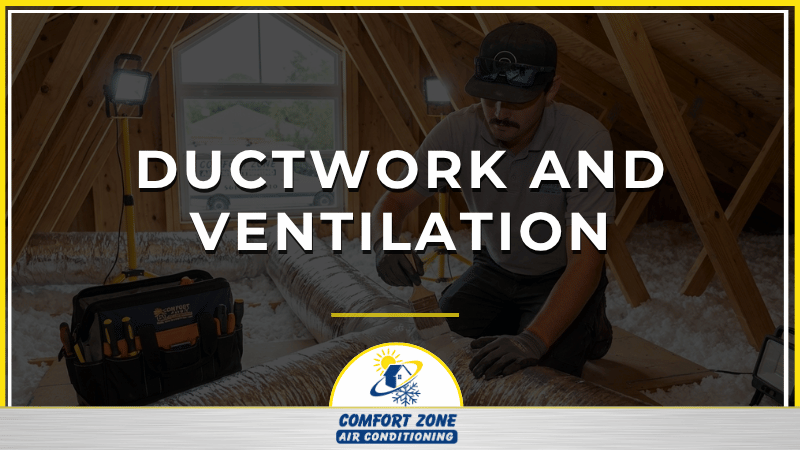
Static pressure decides what filtration your system can carry without losing capacity.
Learn More →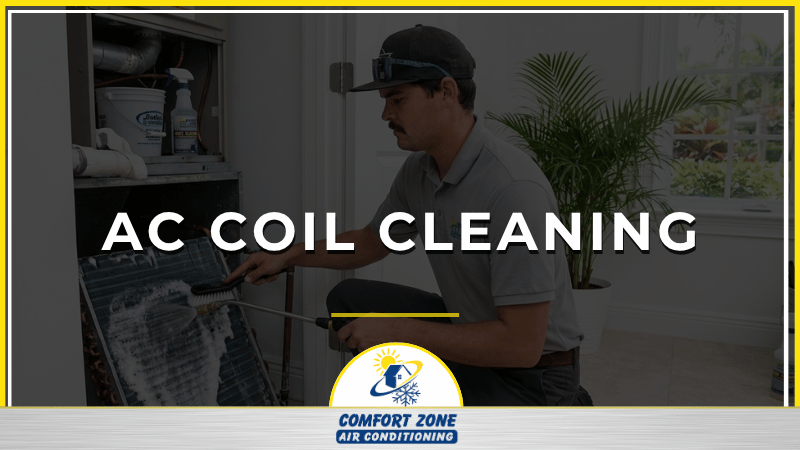
A dirty coil behind a clean filter is the clearest evidence of bypass.
Learn More →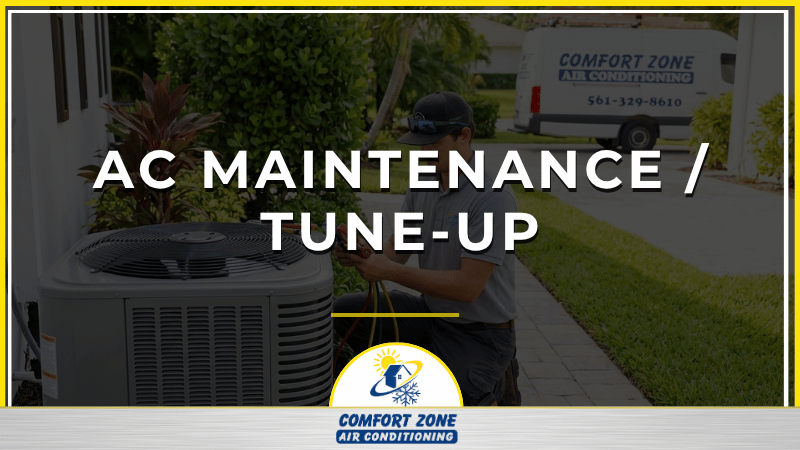
Filter fit and condition get checked at every scheduled service visit.
Learn More →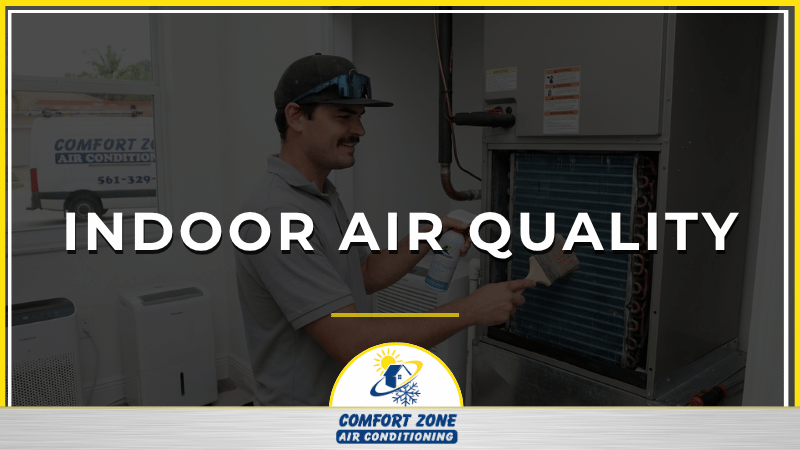
The full picture: filtration, purification, ventilation, and humidity control.
Learn More →
Treats what no filter can capture, regardless of how well it fits.
Learn More →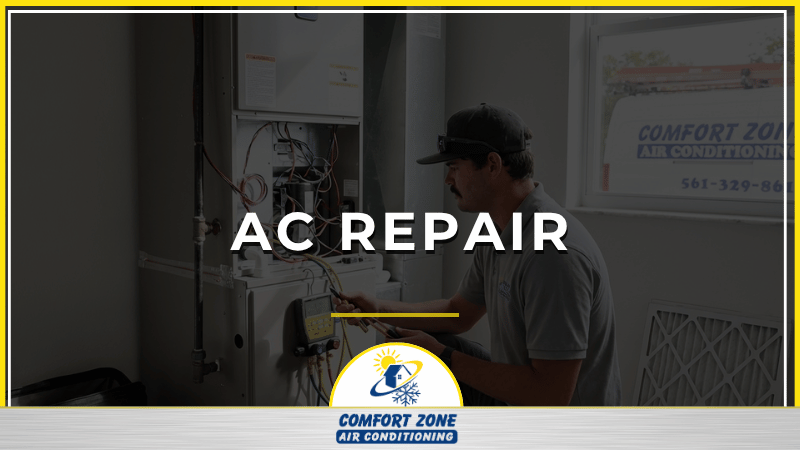
Restricted airflow and frozen coils are frequently filter-related. Diagnosis confirms it.
Learn More →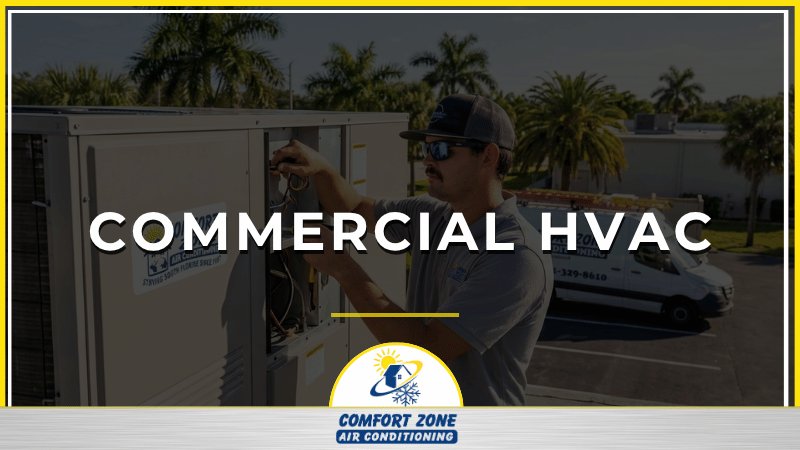
Multi-unit properties where consistent filter supply matters as much as fit.
Learn More →Swipe or use the arrows to browse related services
Serving Palm Beach, Martin & St. Lucie Counties
Our technicians help homeowners and businesses select properly sized filtration designed to maintain airflow, improve air quality, and protect systems in this demanding coastal climate.
It is a common habit and it quietly undoes your filtration. If your system takes an awkward size, we can supply filters cut to the exact dimensions and confirm the rating suits your blower.
Licensed • Insured • Airflow Verified • Since 1976
Comfort Zone has supplied and fitted HVAC filtration across Palm Beach, Martin, and St. Lucie Counties from the same Riviera Beach office since 1976, under Florida HVAC contractor license #CAC1823915.
From emergency AC repairs and refrigerant leak detection to full HVAC system replacement, ductwork installation, heat pump service, and indoor air quality solutions, our HVAC technicians are ready to respond.
If you are experiencing no cooling, system failure, electrical issues, or AC leaks, call now for priority dispatch at 561-790-5910.
Comfort Zone has proudly served residential and
commercial clients since 1976. Our insured technicians
provide reliable HVAC services, including
air conditioning repair, installation, system
replacement, indoor air quality solutions, and 24/7
emergency service throughout Southeast Florida.
License #CAC1823915