
Moisture control that works independently of temperature. If your house reaches the set temperature but still feels damp, the problem is humidity, and turning the thermostat lower makes it colder without making it drier.
HVAC-Integrated Systems • Florida Humidity Specialists • Residential & Commercial Installations
The Short Answer
Comfort Zone provides whole-home dehumidifier installation throughout Palm Beach, Martin, and St. Lucie Counties, as a licensed Florida HVAC contractor (License #CAC1823915) serving the region since 1976. These systems integrate directly with your HVAC equipment to provide precise humidity control without overcooling the space.
Many properties here experience musty odours, heavy or clammy indoor air, and persistent dampness in closets and storage rooms. Air conditioning removes some humidity during cooling cycles, but it is not designed to maintain ideal moisture levels on its own.
Keeping indoor humidity between 45 and 55 percent enhances comfort, reduces the potential for microbial growth, protects building materials and furnishings, and supports efficient HVAC performance.
Often Blamed On The AC
Many homes and businesses have humidity problems without realising the cause. Common signs include:
These are usually caused by excess humidity rather than a fault with the air conditioning system itself.
Moisture removal only happens while the system runs. An oversized unit drops the temperature quickly, satisfies the thermostat, and shuts off before it has pulled much moisture out.
The house reaches the set temperature but still feels damp, and turning the thermostat lower makes it colder without making it drier. This is one of the most common humidity complaints in properties where the air conditioning is working exactly as designed.
Get It AssessedHow It Works
Whole-home dehumidifiers integrate with the HVAC system to remove excess moisture before air circulates through the building. Unlike portable units that treat one room, integrated systems control humidity across the entire property.
Indoor humidity held within a target band rather than left to whatever the cooling cycle happens to achieve.
Musty smells and damp air addressed at the cause, since moisture is what enables them in the first place.
Improved comfort without lowering temperature, because humidity affects how warm a room feels as much as the thermostat does.
Moisture accumulation reduced throughout the home, including closets and storage areas a portable unit never reaches.
More stable indoor air conditions across the day rather than swinging with each cooling cycle.
Because humidity control runs independently of cooling, the HVAC system need not run longer than necessary.
Two Kinds Of Benefit
Excess humidity affects comfort and the condition of building materials. Persistent moisture may impact:
Homes here face added challenges from slab construction, high water tables, and coastal humidity.
High humidity forces air conditioning to run longer to reach comfortable conditions. Reducing that moisture load helps:
Separating humidity from temperature control allows more precise climate management year-round.
Installation Scope
Proper installation ensures the system operates efficiently with existing HVAC equipment, improving comfort without restricting airflow or increasing system strain.
Sized to the property's actual moisture load, because an undersized unit will never reach the target band.
Checked against the existing system, since a dehumidifier added to a duct network already at its limit creates new problems.
Verified before installation rather than discovered as an obstacle partway through.
Drainage planned properly, because a dehumidifier produces water continuously and it has to go somewhere reliable.
System sized and performance calibrated so the target humidity is actually held, not just aimed at.
Integrated with the existing duct system so treated air distributes throughout the property.
Humidity Questions, Answered
Yes. We provide integrated humidity control for residential and light commercial properties across Palm Beach, Martin, and St. Lucie Counties.
Yes. By lowering latent load and reducing excessive runtime, whole-home dehumidifiers can support overall HVAC efficiency and reduce compressor strain.
Air conditioners remove moisture as a byproduct of cooling. Here, short runtime cycles or oversized systems may not reduce indoor humidity sufficiently.
A dedicated dehumidifier manages moisture independently of temperature, which is the difference that matters.
Maintaining indoor humidity between 45 and 55 percent reduces the conditions that allow mould growth.
While no system eliminates all microbial risk, controlled humidity significantly lowers moisture-related growth potential.
No. They work alongside the AC system to reduce indoor humidity without overcooling, which improves comfort and can reduce excessive runtime.
Because moisture removal only happens while the system runs. An oversized unit drops the air temperature quickly, satisfies the thermostat, and shuts off before it has pulled much moisture out.
The result is a house that reaches the set temperature but still feels damp, and turning the thermostat lower makes it colder without making it drier. This is one of the most common causes of humidity complaints in properties where the air conditioning is working exactly as designed.
Between 45 and 55 percent relative humidity suits most properties here. Below roughly 45 percent offers little additional benefit and costs more energy to maintain.
Above 60 percent is where microbial growth, musty odours, and that heavy clammy feeling become likely. A whole-home dehumidifier holds the level within that band rather than leaving it to whatever the cooling cycle achieves.
Only for the room it occupies. A portable unit needs its tank emptied or a drain hose run, and does nothing for closets, storage rooms, or wall cavities elsewhere.
A whole-home unit integrates with the ductwork, drains to the condensate system, and treats air before it circulates. For a single damp room a portable may be adequate; for a property-wide problem it is not.
Related Services
Humidity is usually the root cause behind musty air. This compares every approach.
Learn More →
If the AC is oversized, correcting the sizing at replacement addresses humidity at source.
Learn More →
Stops ventilation importing moisture. A dehumidifier removes what is already inside.
Learn More →
Return-side leaks pull humid attic air into the system, adding moisture continuously.
Learn More →
Smart controls coordinate humidity and temperature rather than chasing one at the other's expense.
Learn More →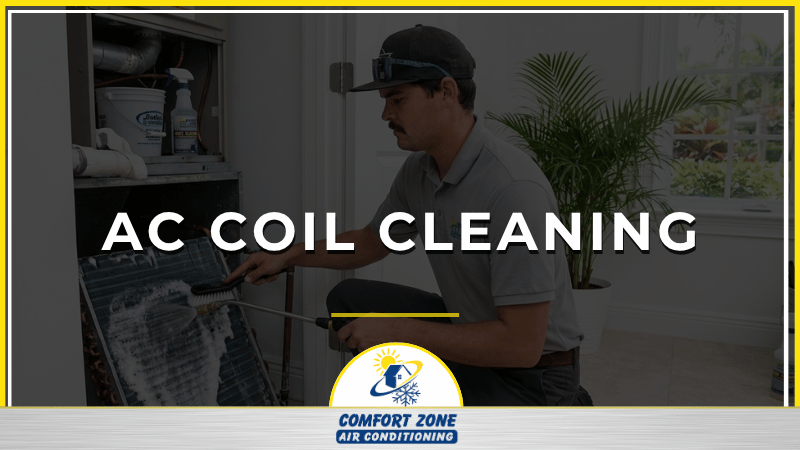
A fouled coil removes less moisture. Sometimes the humidity fix is cleaning, not new equipment.
Learn More →
Controlling humidity removes the conditions growth needs. Purification handles what remains.
Learn More →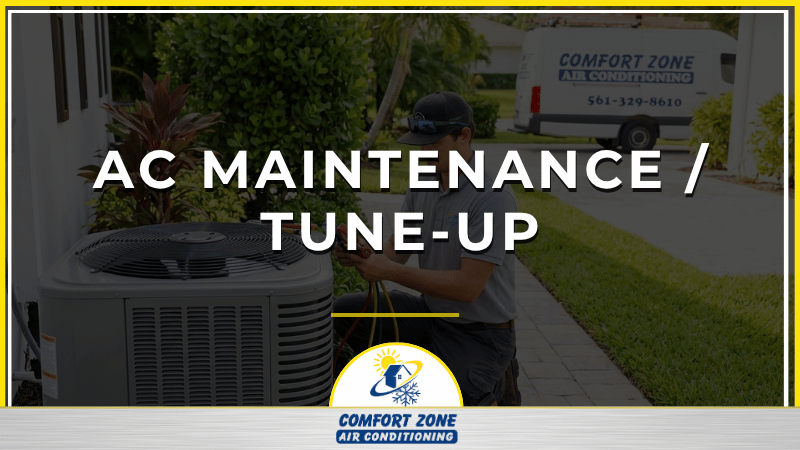
Drain lines and coil condition get checked at service, both of which affect moisture handling.
Learn More →Swipe or use the arrows to browse related services
Serving Palm Beach, Martin & St. Lucie Counties
Our technicians install humidity control systems designed to perform reliably under Southeast Florida's high-humidity climate and year-round HVAC demand.
That is a humidity problem, not a temperature one, and it is worth diagnosing properly. Oversized equipment, a fouled coil, leaking return ducts, and insufficient dehumidification all produce the same symptom with very different fixes.
Licensed • Insured • Sized & Calibrated • Since 1976
Comfort Zone has installed humidity control systems across Palm Beach, Martin, and St. Lucie Counties from the same Riviera Beach office since 1976, under Florida HVAC contractor license #CAC1823915.
From emergency AC repairs and refrigerant leak detection to full HVAC system replacement, ductwork installation, heat pump service, and indoor air quality solutions, our HVAC technicians are ready to respond.
If you are experiencing no cooling, system failure, electrical issues, or AC leaks, call now for priority dispatch at 561-790-5910.
Comfort Zone has proudly served residential and
commercial clients since 1976. Our insured technicians
provide reliable HVAC services, including
air conditioning repair, installation, system
replacement, indoor air quality solutions, and 24/7
emergency service throughout Southeast Florida.
License #CAC1823915